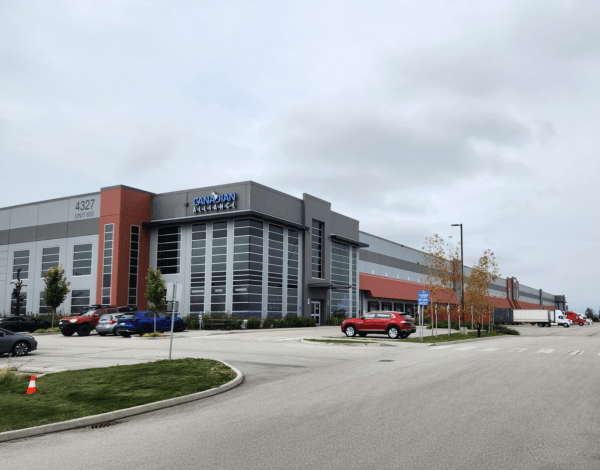
Landing a Costco order is a milestone for any regional food and beverage brand. It signals that your product has the quality, pricing, and market fit to compete at scale. However, the operational reality that follows is where many companies run into trouble — and it has nothing to do with the product itself.
Costco’s vendor compliance standards are among the most demanding in Canadian retail. Delivery windows are tight, pallets need to be configured precisely, and documentation requirements leave little room for error. For brands managing their own warehousing or working with a 3PL that wasn’t built for high-volume retailer compliance, fulfilling those first few purchase orders can quickly become a stress test.
Here’s what BC-based food and beverage brands should understand about the logistics side of being a Costco vendor — and what to look for in a warehouse partner before the orders start coming in.
Costco’s Compliance Expectations Are Different from Other Retailers
Most grocery and specialty retailers have standard inbound requirements. Costco’s are more exacting. Purchase orders come with specific pallet configurations (height, weight, SKU mixing rules), label placement requirements, and delivery appointment windows that are not flexible. A missed appointment or a non-compliant pallet doesn’t just delay a shipment — it can result in chargebacks or jeopardize the vendor relationship.
For food and beverage vendors, there are additional layers: lot tracking, best-before date requirements, and, in some cases, temperature documentation depending on the product category. Getting this right requires a warehousing operation with clear processes, not just available floor space.
The brands that handle this well tend to have one thing in common: they had the logistics infrastructure in place before the volume arrived, not after.
The Inbound Side of the Problem Starts at the Port
Many BC-based food and beverage brands source ingredients or finished goods from overseas — often through the Port of Vancouver. The time between a container arriving at port and product being ready to ship to a retailer like Costco is where a lot of operational risk sits.
Drayage delays, slow container unloading, receiving backlogs, and poor inbound documentation can compress lead times significantly. If your 3PL is located far from the port, or doesn’t have a streamlined receiving process for import containers, that margin disappears fast.
For brands fulfilling Costco orders on a recurring basis, proximity to the port isn’t just a convenience — it’s a meaningful operational advantage. Faster inbound means more time for quality checks, labeling, and outbound preparation before the delivery window opens.
Inventory Accuracy at Costco Volumes Requires the Right Systems
Costco typically orders in volume. That’s the appeal, and also the pressure point. At high order quantities, small inventory discrepancies become expensive problems — short-shipped orders, incorrect lot numbers on documentation, or mislabeled product can all result in chargebacks or refused shipments.
This is where warehouse management systems matter. A WMS with barcode scanning and serial or lot tracking doesn’t just improve accuracy — it creates an audit trail that protects vendors in dispute situations. For food and beverage products with best-before requirements, lot-level tracking also supports any recall or quality control scenarios that may arise.
When evaluating a 3PL partner for Costco fulfillment, ask specifically about inventory accuracy rates and what systems back that figure up. A credible answer goes beyond a percentage — it describes the process.
What to Look for in a 3PL if You’re a Costco Supplier
Not all 3PL providers are built for retail compliance work. When assessing a warehouse partner for Costco vendor fulfillment, the following factors matter most:
- B2B distribution experience — your partner should be familiar with retailer routing guides, pallet build requirements, and inbound delivery standards, not just parcel shipping
- WMS with lot and serial tracking — essential for food and beverage products with date coding, traceability requirements, or potential recall scenarios
- Proximity to the Port of Vancouver — for brands with imported products, shorter port-to-warehouse transit reduces compressed lead times
- Receiving processes that support import containers — not just domestic inbound; drayage coordination and container unloading capabilities matter
- Value-added services — the ability to relabel, repack, or reconfigure pallets to meet retailer specs without moving product to a separate facility
- Experience with compliance chargebacks — a partner who understands the stakes and has processes in place to avoid them
The goal isn’t to find a 3PL that can handle your current volume. It’s to find one whose systems and processes will hold up as Costco orders grow and compliance scrutiny increases.
Getting the Logistics Right Before the Orders Arrive
Regional food and beverage brands that successfully grow their Costco presence share a common trait: they treated the logistics setup as seriously as the sales process. The order is just the beginning. The fulfillment operation behind it determines whether the relationship continues.
If your brand is preparing to supply Costco in British Columbia — or scaling an existing supplier relationship — it’s worth evaluating whether your current warehousing setup is built for that level of compliance. The right 3PL partner won’t just store your product. They’ll help you ship it right, every time.