
Sleep should come easier when you’ve triple-checked the numbers, confirmed the shipments, and briefed the team. But for supply chain managers in 2025, 3 AM wake-ups have become an occupational hazard.
We wanted to know: what’s actually keeping supply chain leaders awake? Not the theoretical risks in consulting reports, but the real, gnawing worries that surface when the house is quiet and the mind won’t shut off.
The Survey
Between February and March 2025, we conducted in-depth interviews with 50 supply chain managers, warehouse directors, and logistics leaders across Western Canada. The sample included:
- 18 managers from mid-sized distributors (annual revenue $10M-$100M)
- 14 directors from larger logistics operations (annual revenue $100M+)
- 12 warehouse managers from manufacturing companies
- 6 supply chain leaders from retail/e-commerce operations
Industries represented: consumer electronics (14), automotive parts and accessories (11), food and beverage distribution (9), home appliances (8), consumer chemicals (5), and general manufacturing (3).
We asked one primary question: “What concern about your supply chain keeps you awake at night?” Followed by: “What are you doing at your company about it?”
The responses revealed patterns that surprised even us. Here’s what we learned, counting down from #7 to #1.
#7: Technology Integration Failures (Mentioned by 22% of respondents)
The Concern:
“We invested $180,000 in a new WMS last year. Six months in, we’re still running parallel systems because the integration isn’t working properly. I wake up wondering if we’ll ever actually use it or if we’ve just lit money on fire.” — Director of Operations, Food Distribution Company
Technology should solve problems, not create them. Yet multiple respondents described scenarios where system implementations stalled, integrations failed, or new platforms underperformed expectations.
The fear isn’t just wasted capital—it’s the opportunity cost. While struggling with system migrations, competitors are gaining visibility, speed, and efficiency advantages.
Quick-Hit Solution:
Insist on phased implementation with clear rollback procedures. Never go “big bang” on technology deployment. Start with one warehouse zone or product category. Prove it works. Then expand. Build contractual milestones tied to performance, not just installation completion.
#6: Sustainability Compliance Pressure (Mentioned by 26% of respondents)
The Concern:
“Our largest retail customer just told us we need to provide detailed carbon footprint data for all shipments by Q3 or they’ll find another supplier. I have no idea how to even calculate that, let alone report it reliably.” — Supply Chain Manager, Consumer Electronics
Sustainability is becoming a major focus for manufacturers in 2025, driven by EHS regulations, customer demands for sustainable products and packaging, and the need for environmental risk management strategies.
The challenge isn’t philosophical—most managers agree sustainability matters. The challenge is practical: measuring, reporting, and managing environmental metrics when systems weren’t built for it and budgets are tight.
Quick-Hit Solution:
Start with Scope 1 and 2 emissions (your direct operations and purchased energy)—these are relatively straightforward to measure. Partner with carriers who already provide carbon reporting. For Scope 3 (supply chain), focus on your top 20% of suppliers by volume and work backward. Perfect data isn’t available yet; directionally correct data that improves quarterly is sufficient for most customer requirements.
#5: Port and Transportation Unpredictability (Mentioned by 34% of respondents)
The Concern:
“I can’t plan anything anymore. Containers that should take 28 days are taking 50 days. Then suddenly three containers show up on the same day and we don’t have labor to unload them. It’s chaos.” — Warehouse Director, Automotive Parts
Vancouver is experiencing significant port delays, with dwell time for outbound containers reaching 20-30 days due to major rail issues, while carriers report delays of 15 to 20 days or greater.
The unpredictability is worse than consistent delays. You can plan around “always 45 days.” You can’t plan around “somewhere between 25 and 60 days.”
Quick-Hit Solution:
Build buffer inventory specifically for high-variability lanes. Not across-the-board safety stock—targeted inventory for SKUs sourced through unreliable routes. Simultaneously, diversify port entry: split shipments between Vancouver, Prince Rupert, and cross-border options from Seattle-Tacoma. The incremental cost per container ($400-$800) is insurance against concentrated risk.
#4: Financial Pressure and Cash Flow (Mentioned by 38% of respondents)
The Concern:
“My CFO wants inventory reduced by 15%. My sales team wants more safety stock. Tariffs are increasing our costs by 8-12%. I’m caught in the middle with no good options.” — VP Supply Chain, Consumer Goods
A survey by Egon Zehnde revealed that 72% of Chief Supply Chain Officers identify financial pressures as their primary challenge, followed by evolving customer demands and the need for operational efficiency.
This tension has intensified dramatically in 2025. Rising costs collide with pressure to free up working capital. Inventory is the battleground—finance sees dollar signs tied up, operations sees buffer against uncertainty, sales sees revenue protection.
Quick-Hit Solution:
Implement ABC inventory segmentation rigorously. A-items (high value, high velocity) deserve investment in safety stock—the cost of stockout exceeds carrying cost. C-items (low value, low velocity) should be minimized ruthlessly or moved to drop-ship models. Focus the finance conversation on total cost (carrying + stockout + obsolescence), not just inventory dollars in isolation.
#3: Workforce Reliability (Mentioned by 44% of respondents)
The Surprise:
Labour shortage? What labour shortage?
Multiple respondents reported they can fill positions—what they can’t do is keep people or maintain consistent performance.
“We’re hiring fine. We’re training fine. Then six weeks later, they’re gone, and we start over. The turnover is killing us. Institutional knowledge is gone. Error rates are up. I have bodies, but I don’t have a workforce.” — Warehouse Manager, Home Appliances.
A staggering 73% of warehouse operators struggle to source enough labour to meet the demands of business, with the labour shortage compounded by shifting demands, peak season surges and the growing complexity of supply chain operations.
In a 2024 study on staffing solution platforms, 43% of companies with warehouse and distribution facilities had lost revenue because of staffing shortages.
The narrative shifted from “we can’t find workers” to “we can’t keep workers” to “we have workers but they’re inexperienced and making costly mistakes.”
This was the surprising finding: the labor crisis hasn’t disappeared—it’s evolved. High turnover means constant training cycles, elevated error rates, and loss of the tacit knowledge that makes operations smooth.
Quick-Hit Solution:
Invest disproportionately in the first 90 days. Pair new hires with experienced mentors. Create clear progression paths so people see opportunity, not just hourly wages. Use WMS and automation strategically—not to eliminate workers, but to make their jobs easier and reduce the learning curve. One company reported implementing voice-directed picking specifically because it cut training time from two weeks to three days, improving retention by reducing early-stage frustration.
#2: Tariff and Trade Policy Volatility (Mentioned by 52% of respondents)
The Concern:
“I built a five-year sourcing strategy in 2023. By 2025 it was obsolete. Now I don’t plan beyond six months because I have no idea what tariff rates will be or what countries will be affected next.” — Director of Procurement, Manufacturing
This wasn’t just about tariff costs—it was about planning impossibility. Across all industry sectors, 94% of respondents in a 2025 survey reported that procurement of raw materials is the most affected part of their supply chain, particularly concerning given that many key components are not readily available domestically.
Respondents described scenarios where:
- Suppliers quoted prices valid for 30 days, making long-term commitments impossible
- Components crossed borders 3-4 times during production, compounding tariff exposure
- Alternative sourcing required 12-18 months to qualify, making rapid pivots unrealistic
“I wake up checking news alerts to see what changed overnight that’s going to blow up my plans today.” — Supply Chain Manager, Electronics
Quick-Hit Solution:
Scenario planning becomes mandatory. Develop three models: base case, 10% additional tariff case, and 25% disruption case. Know which suppliers you’d shift to, what inventory you’d pre-buy, and what customers you’d need to have price conversations with. When policy changes hit (not if—when), you’ll have a playbook rather than starting from zero. Also: build tariff escalation clauses into customer contracts now, before you need them.
#1: Inventory Visibility and Accuracy (Mentioned by 58% of respondents)
The Biggest Concern:
Nearly 6 in 10 respondents identified some variant of inventory visibility, accuracy, or “knowing what we actually have” as their top concern.
“We think we have 800 units. System says 800. I’d bet money we have between 720 and 850. When a customer needs 300 units urgently, I can’t confidently commit because I don’t actually know. That uncertainty costs us sales every single week.” — Operations Manager, Automotive Parts
“I lie awake wondering where that container is, what’s actually in it, when it will arrive, and whether what’s in our system matches what’s physically on the shelves. The lack of visibility is maddening.” — Logistics Director, Consumer Goods
This was the overwhelming #1. Not the dramatic stuff—not tariffs, not port strikes, not geopolitical risk. The mundane, grinding daily challenge of not knowing with confidence what inventory you have and where it is.
The consequences ripple through everything:
- Can’t commit to customers with confidence
- Can’t optimize purchasing decisions
- Can’t reduce safety stock because you don’t trust your data
- Can’t plan promotions or sales initiatives effectively
Quick-Hit Solution:
This requires systematic fix, not band-aids: implement proper WMS if you don’t have one, enforce scan-mandatory culture, institute dynamic cycle counting for high-value SKUs, and create exception reporting dashboards that flag discrepancies immediately. Most importantly, make inventory accuracy a measurable KPI with accountability from dock workers through management. The companies who’ve solved this report it’s transformational—not just operationally, but psychologically. When you know what you have, dozens of downstream decisions become straightforward rather than stressful guesses.
Bonus: What SHOULD Keep You Awake But Doesn’t
We also asked: “What risk aren’t you worried about that you probably should be?”
Three themes emerged:
Cybersecurity in Supply Chain Systems
In a survey by the Business Continuity Institute, 55.6% of businesses highlighted that cybersecurity was their primary concern in ensuring supply chains were resilient, with cyber-attacks and data breaches identified as the main threats for the upcoming five years.
Yet only 18% of our respondents mentioned cybersecurity unprompted. Most supply chain leaders focus on physical goods movement—containers, trucks, inventory—not digital vulnerabilities.
The reality: your WMS, TMS, and ERP systems are connected to supplier systems, customer portals, and often external logistics networks. A ransomware attack that locks your WMS doesn’t just slow operations—it stops them completely. When a system you check 50 times daily suddenly goes dark, you’re operating blind.
Why it should worry you: One automotive supplier lost 11 days of operational capability after a ransomware attack. They had inventory but couldn’t locate it, process orders, or generate shipping documents. Estimated cost: $2.3 million in lost revenue and recovery expenses.
Single Points of Failure in Supplier Networks
Many respondents could name their top 3-5 suppliers. Few could articulate who their suppliers’ suppliers were—the sub-tier risk.
When a semiconductor manufacturer in Taiwan experiences a fire, it doesn’t just impact direct customers. It impacts everyone 2-3 tiers down who use components containing those semiconductors. Most companies have zero visibility to sub-tier supplier risk.
Why it should worry you: Supply chains are networks, not linear chains. A disruption you never saw coming, from a company you’ve never heard of, can halt your production because they supply a critical component to your supplier’s supplier.
Demand Volatility in a Recessionary Environment
Most contingency planning focuses on supply disruption. Few respondents had concrete plans for demand collapse.
“We’ve modeled what happens if our supplier in China goes offline. We haven’t modeled what happens if consumer spending drops 20% and we’re sitting on three months of inventory nobody wants.” — Supply Chain Director, Consumer Electronics
A large majority—82%—say they face challenges in balancing short-term needs with long-term strategic changes, with 14% saying the challenges are significant.
Why it should worry you: In a recessionary environment with job cuts and inflation, demand can fall faster than you can adjust supply. Inventory becomes obsolete. Fixed warehouse costs become albatrosses. The companies that survive are those who built flexibility into their supply chain infrastructure before demand collapsed, not after.
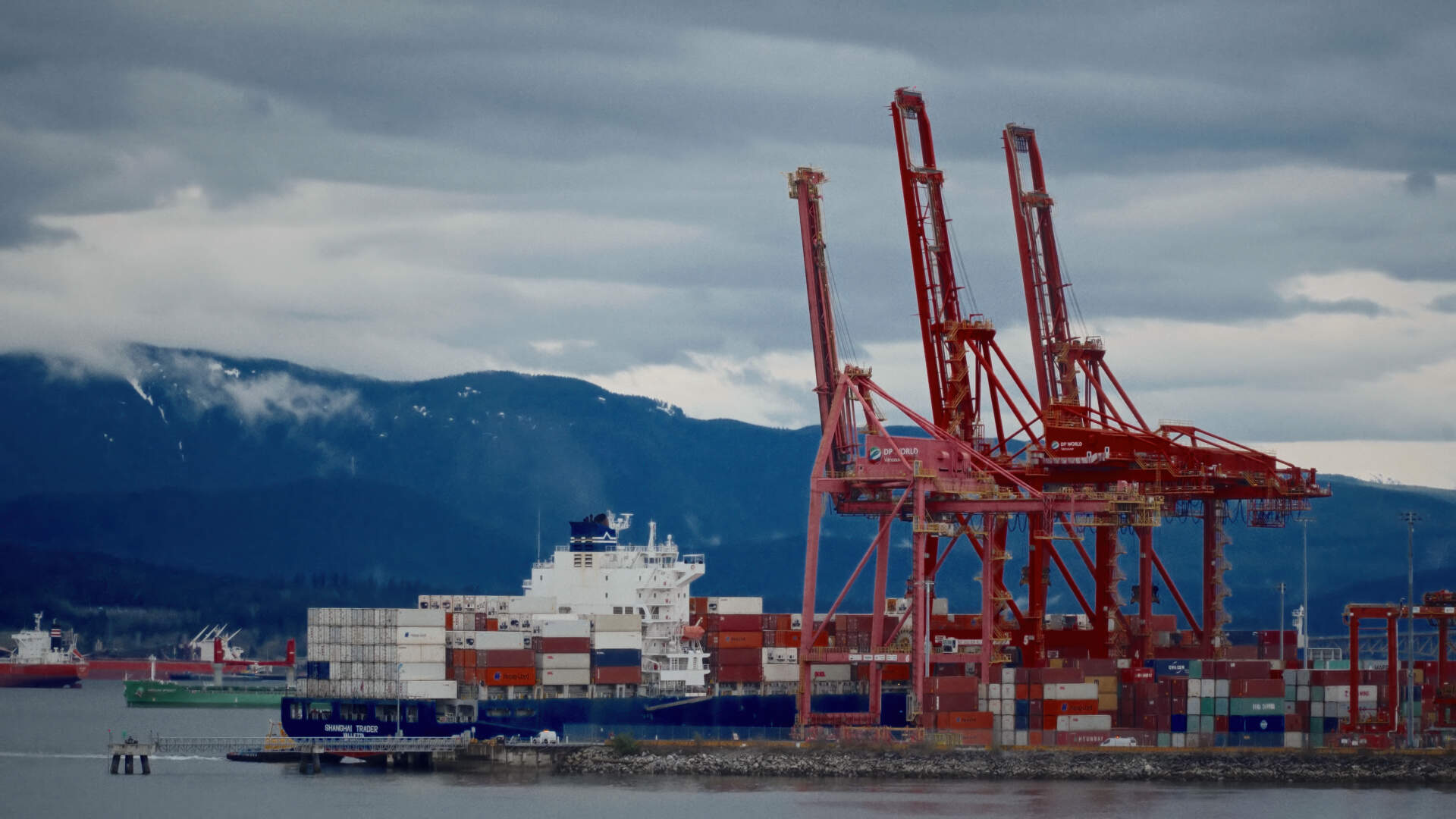
VANCOUVER, CANADA – APRIL 11, 2017 – Cargo ship loading containers at a port in Vancouver, with mountains and cloudy sky
The Common Thread
Across all seven concerns, one theme emerged: uncertainty has replaced optimization as the primary challenge.
The supply chain leaders we spoke with aren’t worried about shaving 2% off costs or improving efficiency by 5%. They’re worried about not knowing—not knowing what they have, where it is, when it will arrive, how much it will cost, or whether demand will hold.
The playbooks from 2019 don’t work anymore. The systems built for low-variability global supply chains are struggling in high-variability, high-uncertainty environments.
What helps: visibility, flexibility, and partnerships.
Visibility: Real-time data about inventory, shipments, and supply chain status. When you can see problems forming, you can respond. When you’re blind, you react to crises.
Flexibility: Multiple suppliers, multiple routes, variable capacity through 3PL relationships. Rigid, optimized supply chains are fragile. Flexible supply chains with intentional redundancy are resilient.
Partnerships: Relationships with suppliers, carriers, and logistics providers who share information openly and have your back during disruptions. Transactional relationships work fine in stable times. In chaos, partnership depth determines who gets priority and who waits.
The managers sleeping best aren’t those who’ve eliminated risk—that’s impossible in 2025. They’re the ones who’ve built systems and relationships that let them see risk coming and respond quickly when it arrives.
Methodology Note: Survey conducted February-March 2025 via structured interviews with supply chain managers, warehouse directors, and logistics leaders across Western Canada. Industries represented: consumer electronics, automotive parts, food and beverage, home appliances, consumer chemicals, and manufacturing. Company sizes ranged from $10M to $500M+ in annual revenue. Respondents were promised anonymity; quotes have been lightly edited for clarity and length.
About Canadian Alliance Warehouse and Transportation
At Canadian Alliance, we understand what keeps supply chain managers awake—because we work with them every day. Our Delta, BC facility combines strategic location near the Port of Vancouver with advanced WMS technology that provides the inventory visibility our customers need to make confident decisions. When uncertainty is the new normal, having a logistics partner who provides transparency, flexibility, and responsive service helps you sleep a little better. Visit us at 600-4327 Salish Sea Way, Delta, BC, or learn more about our warehousing and transportation solutions designed for today’s challenging supply chain environment.